

Ideally, you have worked to minimize your taxes throughout the year. Here are some year-end strategies that may help further reduce your tax bill. Before implementing these or any year-end strategies, talk with your tax professional.
DEFER OR ACCELERATE INCOME
Project whether you’ll have higher taxable income in 2026 or 2027. If 2027 is higher, consider receiving your employer bonus, investment income, and business income this year.
Do the opposite if, for example, you expect to lose a dependent, have a spouse on leave, or incur business losses, resulting in lower taxable income in 2027.
BUNCH DEDUCTIONS
For instance, if 2026 medical expenses exceed the 7.5% of adjusted gross income (AGI) threshold, squeeze in planned 2026 medical expenses to maximize 2026 tax savings.
Before bunching expenses into 2026, consider your overall tax brackets for this year and 2027. If you expect your income to rise enough in 2027 to push you into a higher bracket, it may make sense to postpone a deduction.
TOP OFF YOUR HEALTH SAVINGS ACCOUNT
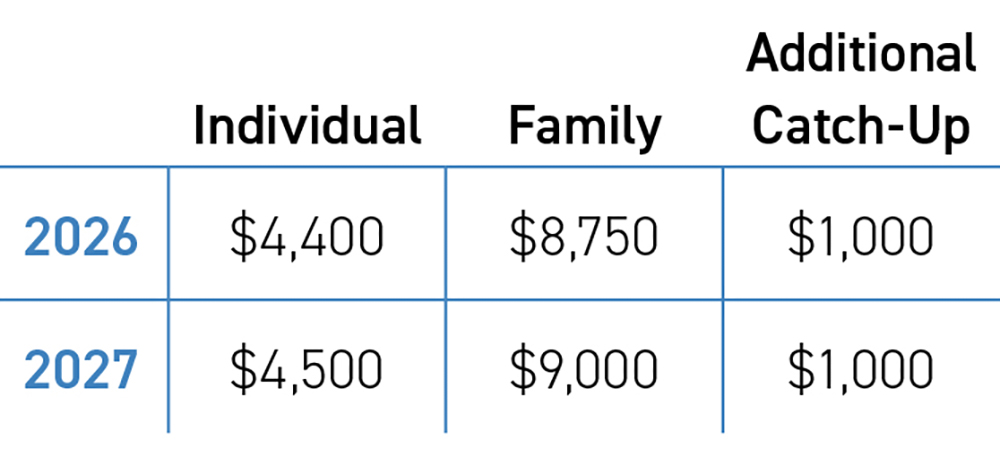
You have until April 15, 2027, the tax filing deadline, to make Health Savings Account (HSA) contributions for this year. If you haven’t already maximized your contribution, do so. HSA contributions and earnings are generally excluded from taxable income, and distributions aren’t taxed if used to pay qualified medical expenses. Other requirements apply, including enrollment in a high-deductible health plan.
HSA Contribution Limits For planning purposes, compare the 2026 and the new 2027 inflation-adjusted limits – see table. Additional Catch-Up HSA Contribution limit is for individuals age 55 or older.
REVIEW YOUR CHARITABLE GIVING PROGRAM
Reviewing your 2026 charitable giving effectiveness and potential tax benefits may help minimize 2026 taxes and significantly affect 2027 taxes.
Ensure your 2026 expectations are reasonable given your and the charity’s timelines for change and the nature of the work. Consider how giving more could increase impact and reduce taxes.
Each year, changes affect individuals and small business owners, so it’s important that we conduct your year-end review to ensure you’re on track.