

Importance of Managing Cash Flow

Effective cash management is the first step toward ensuring you have enough funds to meet your business’s financial obligations. Cash planning helps you increase inventory, expand to new locations, and pursue other growth opportunities. It requires the focus and skills of everyone on your management team.

PROVIDING A SNAPSHOT

Your business’s cash flow statement is an essential document. It records the cash coming in (inflows) and cash going out (outflows), including cash from operating, financing, and investing activities. The bottom line shows the amount of cash available to the company. It’s a helpful starting point for your planning.

MAXIMIZING AVAILABLE CASH

Maximizing cash on hand should be a primary goal in managing cash flow. You can speed up collections by encouraging electronic payments and credit card use, and by offering customers discounts for prompt payments. Delay cash outflows by postponing payments to vendors as long as possible to keep more cash available.

Implementing a purchasing plan can also help prevent your business from holding excess inventory without receiving payment, which can tie up cash in unsold goods.

COORDINATION IS KEY

Maintaining close relationships with your financial, legal, and tax professionals can provide the guidance needed to keep your business running smoothly. Financial and tax planning are essential for small business owners. Professional guidance can offer an unbiased perspective on your efforts and help you better manage your business’s cash flow.

August 2026 Question and Answer

QUESTION:

What are the basics for creating a will?

ANSWER:

Creating a will ensures your assets are distributed according to your wishes after your death. Start by confirming that you are of legal age and of sound mind. Clearly identify yourself as the testator and state your intent to make a will.

List your assets and beneficiaries, and appoint a trusted executor to manage your estate. For parents, designate guardians for minor children. The document must be in writing, dated, signed by you, and witnessed by at least two non-beneficiaries.

Review and update regularly. While DIY templates exist, consulting an estate attorney helps avoid legal pitfalls and ensures compliance with state laws. A valid will provides you and your family peace of mind.

Save for Retirement or College

For those with young families, this can be a quandary. Try to save for both, but prioritize retirement savings. There are loans for college, but not for retirement.

SET PRIORITIES

While you value providing higher education for your children, step back and think carefully before choosing to fund education over saving for retirement. Alternatively, start your children working toward winning scholarships in their freshman year of high school. Academics and sports are one way, but leadership in clubs and community service are also important.

MAXIMIZE EMPLOYER 401(K) MATCHES

A 401(k) plan matching contribution may be the best return you will ever get on an investment. In addition to the match, you also get a tax break on your contributions and the earnings on those contributions. If your employer also offers a Roth 401(k) option, all contributions, including the match, will be made with after-tax money.

CONSIDER A COLLEGE SAVINGS PLAN

Ask your professional advisor about a college savings plan only after you’ve maximized your retirement plan matching contributions. They can help you compare the benefits of saving more in your company plan, contributing to an individual retirement account or Roth IRA, or funding a separate college savings plan.

Don’t Fear Capital Gains Tax

Everyone wants to minimize taxes owed, but the suitability of an investment for you is more important than whether you may, at some point, owe capital gains tax on it. The point is to manage capital gains, not to avoid attractive investments that may trigger them.

KNOW THE FACTS

Long-term capital gains apply to the appreciation of assets you sell after holding them for more than a year. Gains on assets sold within a year of purchase are taxed as ordinary income. Long-term federal capital gains tax rates are 15% to 20% and may be as low as 0% for lower-income taxpayers, potentially making capital gains less costly than regular income tax. Remember to budget for the tax you’ll owe on gains.

HARVEST LOSSES

Sell losing investments and replace them with assets that offer more promise. Then offset realized capital gains with those losses. But be aware that you’ll lose your tax advantage if you repurchase identical securities within 30 days of selling them.

Remember, all of your investments should help move you closer toward your financial goals, even if it means paying capital gains taxes.

August 2026 Client Profile

Tom knows that flextime can be a valuable benefit for his employees, but he isn’t sure how to implement a flextime program.

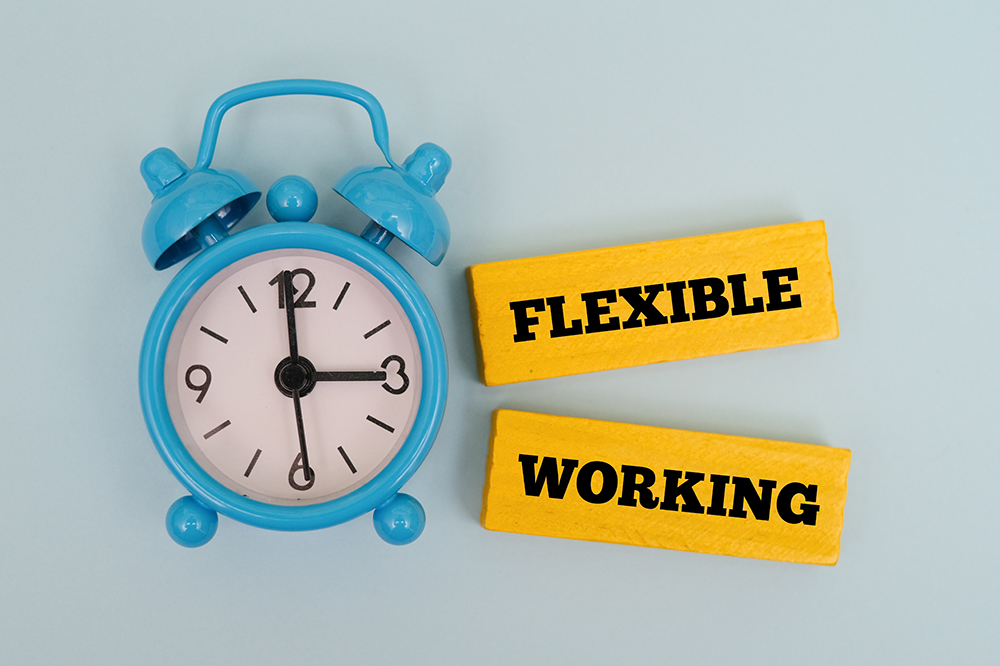
Balancing work and life demands can be hard for employees. A traditional workweek schedule doesn’t offer the flexibility that all employees need. Allowing employees to work flexible schedules is an inexpensive way to help them find their work-life balance.

Flextime is any schedule that doesn’t follow the standard workweek model. A flextime workweek could consist of four 10-hour days or of hours set by the employee that include the business’s defined peak work hours. Schedules can be whatever both Jeff and his employees agree upon.

For the flextime program to work successfully, Tom will need to monitor schedules carefully to ensure that key people are available during critical work hours. He should also ensure sufficient supervision and coordination between departments within his business. Safety and security issues will need to be reexamined, and policies changed as necessary, before flextime can be implemented.

Client Profile is based on a hypothetical situation. The solutions discussed may or may not be appropriate for you.

Health Savings Accounts and OBBBA

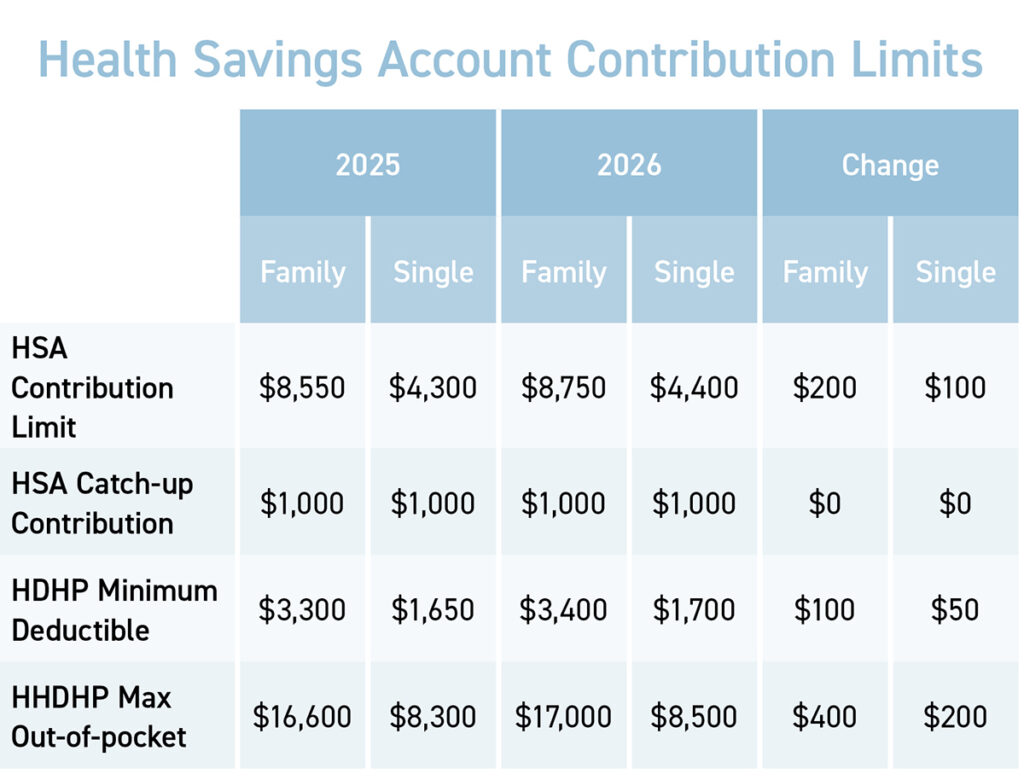
Under OBBBA, changes expanded eligibility for Health Savings Accounts (HSAs), effective January 1, 2026. HSAs are triple tax-advantaged, with tax-deferred contributions, tax-free earnings, and tax-free withdrawals for qualified medical expenses. You can roll over any balance remaining at the end of 2026 into 2027. Nonqualified withdrawals before age 65 are subject to a tax penalty. After age 65, you can take penalty-free withdrawals for any reason, but you must pay income tax on the non-qualified amount. To contribute to an HSA, you must have a high-deductible health plan (HDHP).

EXPANDED BY OBBBA

OBBBA made changes that expand the health plans that qualify as HDHPs. First, it extends the rule allowing plans to be considered HDHPs, despite not having a deductible for telehealth services retroactively to January 1, 2025. Second, OBBBA expands HSA eligibility to include those enrolled in Bronze and Catastrophic plans available on state and federal insurance exchanges under the Affordable Care Act.

This provision takes effect on January 1, 2026. Third, it allows individuals with HDHPs to enroll in Direct Primary Care arrangements (sometimes referred to as “concierge medical care”) while remaining HSA eligible, provided the monthly fee for DPC services doesn’t exceed $150 for individuals or $300 for families (both adjusted for inflation). DPC fees are also considered qualified medical expenses that can be paid with HSA funds.

Business Interest Deduction

A business interest deduction is a tax provision allowing businesses to deduct interest paid or accrued on debt related to their operations, such as loans for equipment, vehicles, or business expansion.

LIMITATIONS

The Tax Code limits corporations’ business interest expensing to any business interest income plus 30% of the business’s adjusted taxable income (ATI). Generally, this limit doesn’t apply to companies with average annual gross receipts for the prior three taxable years below a certain threshold ($32 million for 2026). The One Big Beautiful Bill Act (OBBBA) reinstates a more favorable business interest expense deduction by allowing businesses to add back depreciation, depletion, and amortization to their ATI calculation, thereby increasing the amount of deductible interest. The change was effective starting in 2025.

Is a Roth IRA a Good Fit for Your Goals

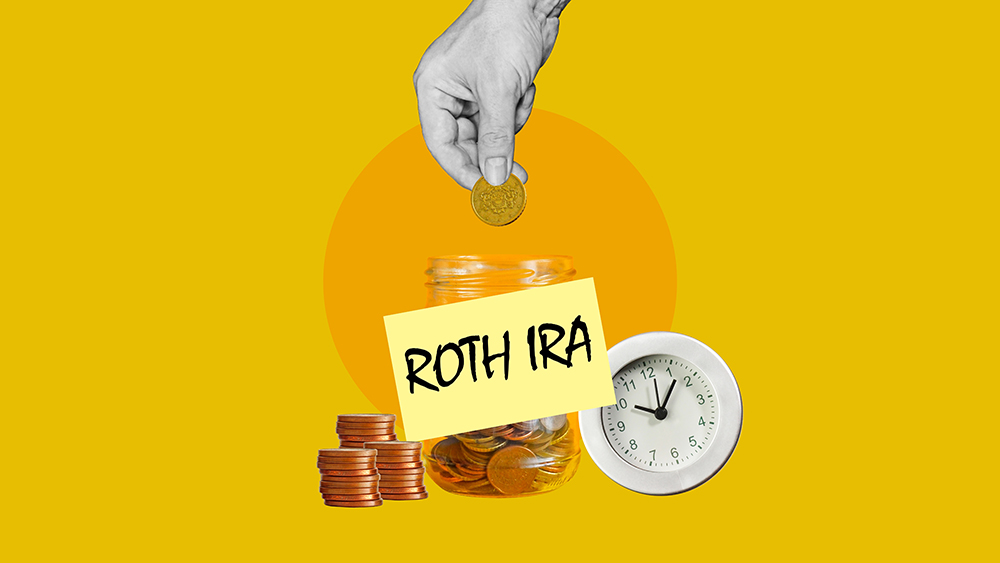
Traditional and Roth individual retirement accounts are both solid options for retirement savings. A Roth IRA offers tax advantages when you withdraw your funds, while contributions to a traditional IRA are tax-deferred until you take distributions. Comparing both IRA options can help you make an informed decision.

ROTH BASICS

Contributions to a Roth IRA are made with after-tax dollars. That means you won’t get a tax deduction for your contributions. However, the money in your account grows tax-free. Withdrawals are also tax-free, providing you with a tax-free income stream in retirement. The maximum contribution to Roth and traditional IRAs in 2026 is $7,500, or $8,600 for people aged 50 or older.

NO REQUIRED DISTRIBUTIONS

Traditional IRAs require minimum distributions from your account once you reach age 73. In contrast, a Roth IRA has no minimum distribution requirement—ever. If you don’t need the funds in your account, you can leave it untouched, so it continues to grow tax-free during your lifetime and then pass the Roth IRA tax-free to your heirs.

INCOME LIMITS

You cannot contribute to a Roth IRA if your modified adjusted gross income (MAGI) exceeds the applicable limits. In 2026, the income limit for single and head-ofhousehold filers to contribute the maximum amount is $168,000. Married joint filers can contribute the full amount if their MAGI is $252,000 or less. THE FIVE-YEAR RULE Contributions to a Roth IRA can be withdrawn at any time, but earnings distributed before age 59-1/2 may be subject to a 10% penalty and income tax unless you meet an exception. After age 59-1/2, you can withdraw both contributions and earnings without penalty once the account has been open for at least five tax years.

HOW TO DECIDE

Consider a Roth IRA if you expect to be in a higher tax bracket in retirement. Because you’ll pay taxes on the conversion, it’s usually best to do it when your income dips. Talk with your trusted advisors so you can make an informed decision together.

August 2026 Client Line Newsletter

Is a Roth IRA a Good Fit For Your Goals – a Roth IRA offers tax advantages when you withdraw your funds.

Business Interest Deduction – a tax provision allowing businesses to deduct interest paid or accrued on debt related to their operations.

Health Savings Accounts and OBBBA – changes expanded eligibility for Health Savings Accounts effective January 1, 2026.

August 2026 Client Profile

Don’t Fear Capital Gains Tax – the point is to manage capital gains, not to avoid attractive investments that may trigger them.

Save for Retirement or College – try to save for both but prioritize retirement savings.

August 2026 Question and Answer

Importance of Managing Cash Flow – effective cash management is the first step towards ensuring you have funds to meet your business’s financial obligations.